A first dovetail tells you quite a bit. You can see where the saw wandered, where a chisel slipped, and where a student began to understand what accurate hand-tool work feels like. But walk around our Training the Hand workshop on a Thursday evening, and the joints only tell part of the story.
Class 45 brought together nine paying students and seven combat-wounded veterans for six days of traditional furniture-making instruction. The aim is straightforward: learn to work wood with your hands, much as furniture makers did 200 years ago. What develops around those benches is harder to put into a course description.
There is serious concentration. There is a considerable amount of teasing. There is very good home cooking. And there are people discovering that they can do something they genuinely did not think was possible when they arrived.
Table of Contents
- Six Days at the Bench, With a Bigger Purpose
- A Little Canadian Warmth Before the Joinery
- First Dovetails: Why We Ask for a Fit Straight From the Saw
- Perseverance Is a Woodworking Skill
- What the Veterans Described Beyond the Woodworking
- One Veteran Recommends Another
- The Civilians Are Changed by the Week, Too
- The People Who Make the Workshop Work
- A New Woodworking Vise With Uninterrupted Clamping
- Ian Kirby, Furniture Design, and Books Worth Studying
- Workshop Dates and Toolmaking News From October 2026
- Keeping the Purple Heart Project Going
Six Days at the Bench, With a Bigger Purpose
The Purple Heart Project brings combat-wounded veterans into the workshop alongside civilian students. They learn together, struggle with the same cuts, and celebrate the same little victories.
That shared starting point matters. Someone may have decades of experience with power tools. Someone else may never have picked up a dovetail saw or known the names of the tools on the bench. Once the work begins, everybody has something to learn.
This was our final Training the Hand class of the year, although a separate drawer-making workshop was still ahead. By Thursday evening, students were working through their first through dovetails and their first concealed dovetail joints, with more practice time remaining before Saturday night.
We also had something special arranged for Friday: a Zoom introduction to furniture design with Ian Kirby. Each student received one of his books. Learning to make an accurate joint is important, but understanding how to turn those joints into well-designed furniture is another essential part of the craft.
A Little Canadian Warmth Before the Joinery
Before inspecting the work, we took time to thank the people doing it.
Our friend Moose has made a tradition of giving sweaters to the veterans and scholarship students. Around here, those sweaters have acquired the affectionate name of “dead cat” sweaters. The presentation comes with handshakes, hugs, and enough good-natured nonsense to prevent anyone from becoming too formal.
This presentation had a little uncertainty attached. Moose’s supplier had discontinued the sweater, and he had not yet found a suitable replacement. He hoped to continue the tradition, although the product and some details of his business were still being worked out.
What was not uncertain was his appreciation for the people he has met through the program. He described their courage and commitment, and the lasting impression they have made on him. Even from his supporting role, he has seen how much the week can mean.
Ken also helped distribute gifts for the civilian students on behalf of RC Woodworking. The recognition was not reserved for one part of the room. Everybody contributes to the character of a class.
Then, after a roast chicken dinner and strawberry shortcake, it was time to get back to the benches. A person could become distracted by the meals around here. Several students appeared to have developed that particular skill already.
First Dovetails: Why We Ask for a Fit Straight From the Saw
One detail is important when assessing these joints: students are not allowed to test-fit them or pare the mating surfaces to sneak up on a fit. The goal is for the joint to assemble from the original cutting.
That is a demanding standard for a beginner. It makes the results more meaningful, and it keeps the attention where it belongs: on learning to control the tools accurately.
These are practice joints, not a competition to hide every mistake. A small error can tell us exactly what needs attention next.
Robert and Josh: Beginning With No Dovetail Experience
Robert had completed three joints, including his first half-blind dovetail, despite never having cut a dovetail before arriving. There were also some trial tail boards that had not worked out. Those count as part of the education, too, even if we did have a little fun about where all the lumber had gone.
His next priority was improving his sawing. That was the right diagnosis. A few small inaccuracies were visible, but much of the work was good. The useful response was not to dismiss the joint. It was to identify the errors and make the next attempt better.
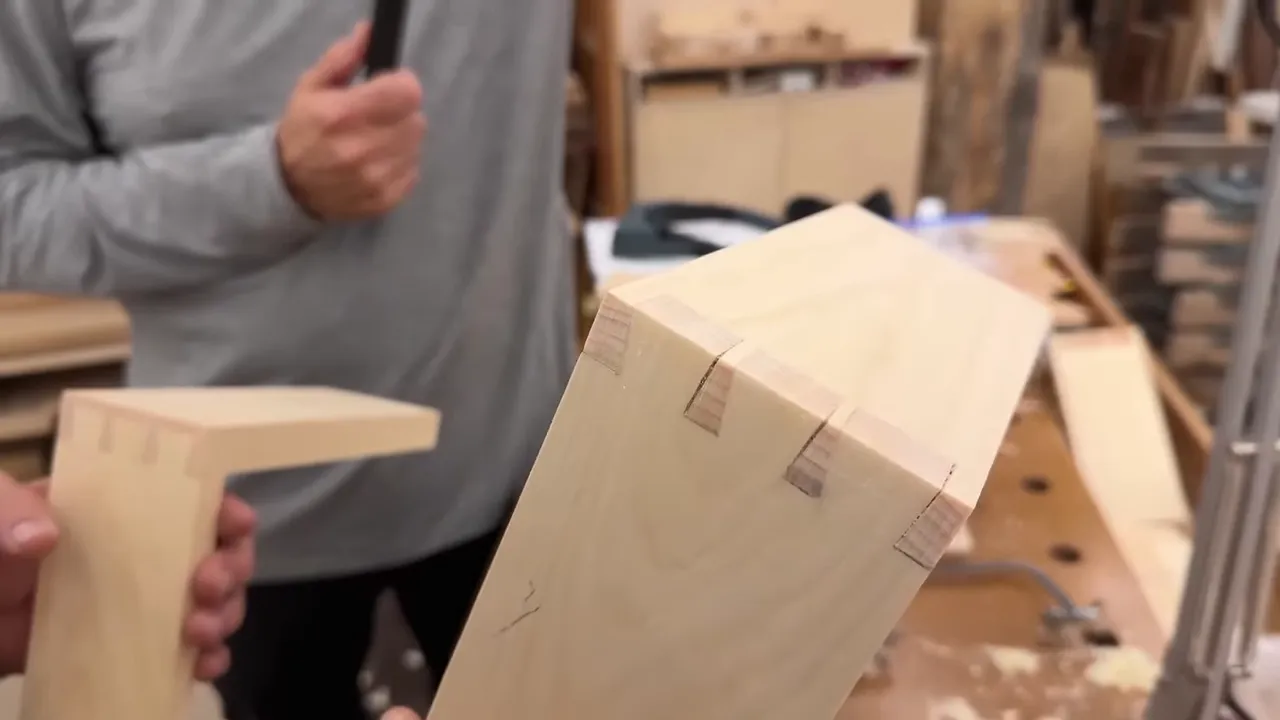
Josh, a scholarship student from Wildwood, Florida, was another complete beginner at dovetails. His first through joint showed both the tail-board and pin-board sides clearly. His first half-blind was assembled but still needed its surfaces cleaned up.
That distinction matters. An unplaned joint can look rougher than the underlying fit deserves. Cleaning the faces makes it easier to assess what actually happened at the joint line.
Brian and Paul: Good Work, Honest Mistakes
Brian’s first concealed dovetail was particularly impressive. So was his first through dovetail. But when he began describing the week, the woodworking quickly became secondary. He was deeply affected by the people around him and the stories they had shared.
Paul, a surgeon from Austin, Texas, came with an interest in woodworking as he approached retirement. He had framed houses before, but fine hand-tool woodworking was new territory. Being skilled with his hands professionally did not make learning to cut wood accurately automatic.
He found the work challenging and humbling. His early joints included a miscut and a chisel slip, but he understood the process and could see what needed practice. That is a useful position to be in after only a few days.
A mistake in one spot does not erase everything done correctly around it. We need to be honest about the fault without losing sight of the progress.
A Note on Half-Blind and Half-Lap Dovetail Terminology
Throughout the class, I kept catching myself using “half-blind” and then trying to change it to “half-lap dovetail.” That comes from Ian Kirby, one of my mentors, who prefers the latter description.
For clarity, we were discussing the concealed dovetail form commonly called a half-blind dovetail, not an ordinary half-lap joint. Changing a term you have used for years takes a little practice of its own. Apparently, my tongue needed some workshop time as well.
Perseverance Is a Woodworking Skill
Not everyone progresses at the same rate, and not every worthwhile lesson produces a beautiful first joint.
Miles, who had worked wood on and off for roughly 40 years, joked that his efforts might qualify for the Cosman Hall of Shame. Underneath the joke was a useful admission: the hand-eye coordination required was more difficult than he had expected.
He also felt a substantial difference when using the saws and chisels in the class. Henry, our lone Canadian student, made a similar point. He had been a proud power-tool owner, but the experience of using good hand tools with instruction had changed how he expected to work at home.
Those were their assessments, and I appreciated them. Tools do not eliminate the need to learn. But students should be able to concentrate on developing a skill rather than wondering whether the tool is fighting them.
Art’s Progress at 74
Art, almost 75, provided one of the clearest examples of perseverance in the room. He had spent plenty of time studying woodworking instruction, but he found that having the tools in his hands, with help nearby, was a different experience.
His first dovetail had plenty of room for improvement. His second still had faults. By the later attempt, however, the fit had improved dramatically.
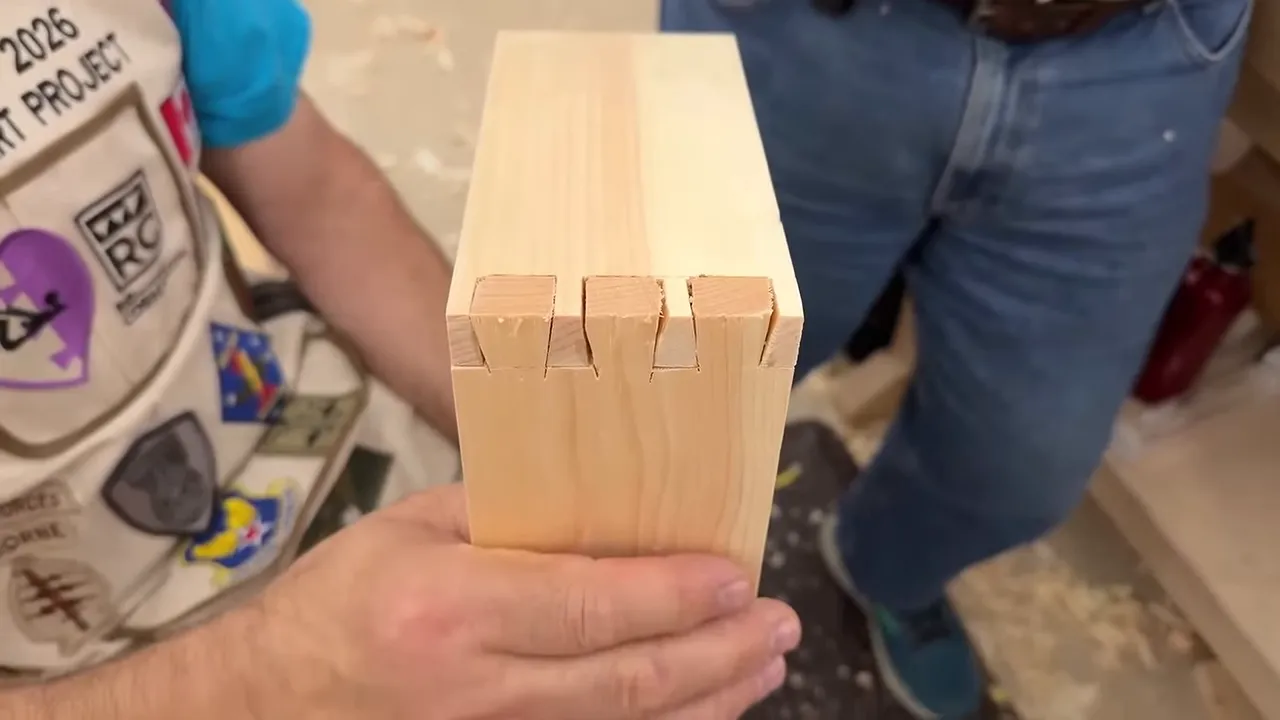
There was some broken material on the later piece, and we did not pretend otherwise. But the way the joint came together showed real progress. That was the important comparison.
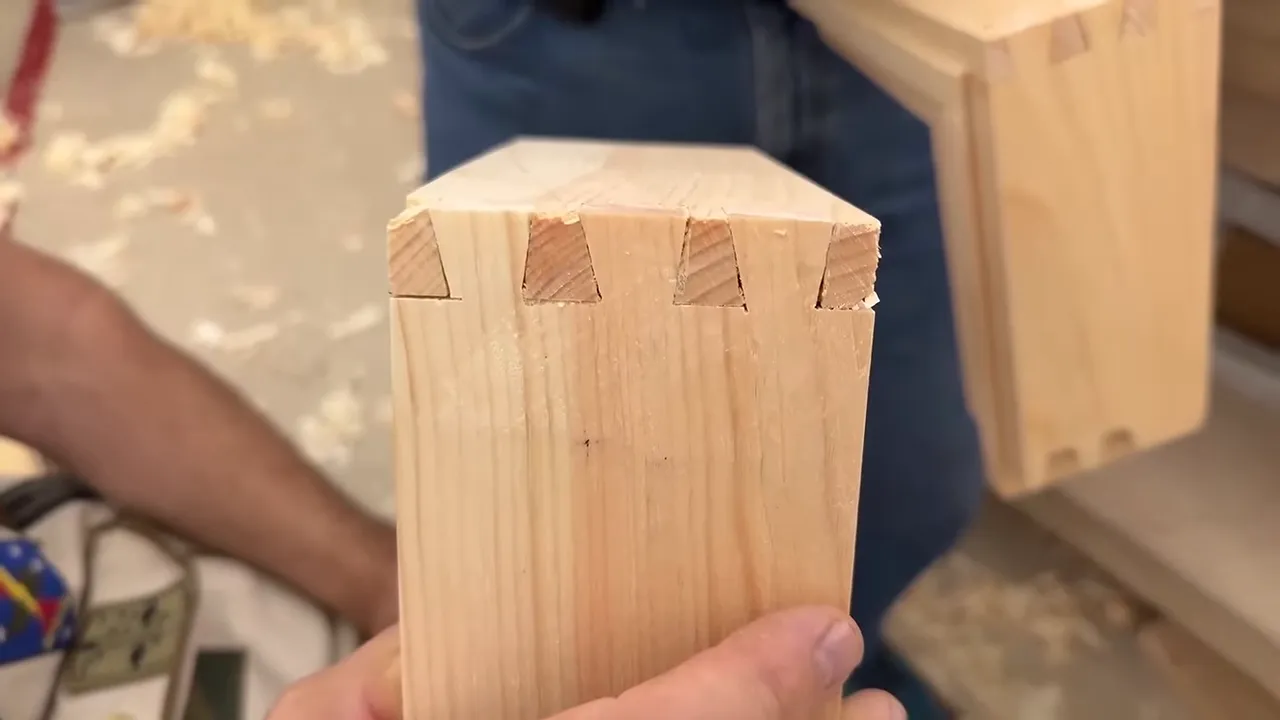
Art still had time to make more joints before the end of the course. Better yet, he was eager to go home and practice.
Small Gains and Different Starting Points
Mike, another veteran in the class, had arrived without a background in woodworking or experience with these tools. He found the work demanding but rewarding, and his advice was sensible: keep going, because small improvements accumulate.
He found sawing more difficult than chiseling. The feel of a sharp chisel cutting wood was especially satisfying to him. That is a useful reminder that students may connect with different parts of the process before the whole skill comes together.
Steve, from Northern Virginia, had used power tools but was new to such an immersive hand-tool environment. Back problems and previous surgery made sustained weight-bearing difficult. Even with that challenge, he had produced both joint types and was learning something with every attempt.
Some students preferred not to speak publicly or be identified. That was fine. Their work still deserved recognition, and several first attempts were remarkably good.
At one bench, I took a student’s joint and planed the faces clean. Once the proud material was removed, the quality of that first dovetail became much easier to appreciate. Surface cleanup reveals the fit; it does not correct an inaccurate joint.
There was also a safety reminder during the walk around: do not place your other hand in the path of a chisel. If the tool slips, your hand must not be where it goes. That lesson is more important than finishing one more cut.
What the Veterans Described Beyond the Woodworking
The benefits described by the veterans were personal and specific. They spoke about quiet concentration, working with their hands, learning something useful, and being among people with whom they could connect.
Those are their experiences, not a promise that a woodworking course will affect everyone in the same way. But listening to them explains why we care so much about keeping this program going.
Mike and Sergeant Major Titan
One Mike brought his service dog, Titan, who had apparently been promoted one rank above his handler. Sergeant Major Titan had been supervising the week’s work from beside the bench.
Mike had served just short of 22 years, including more than three and a half years of combat service. When asked who else should have the opportunity to attend, he struggled with the thought of the men who had not returned.
He was grateful to the donors who had made his place possible. He also described handwork as refreshing and healing for him, something that helped take his mind away from difficult thoughts and into the task in front of him.
His interest did not stop at making something for himself. Having carved wood over the years, he knew the special value people place on a handmade gift. A small object made with your own hands can become something another person keeps in a place of honor.
His Christian faith also shaped that connection to the craft. He spoke about Jesus as a carpenter and the meaning he found in turning wood into something beautiful to give away.
And his first dovetail? An admirable job. Titan could reasonably take some supervisory credit.
Dennis: A First Joint After a Long Recovery
Dennis, from St. Augustine, Florida, produced outstanding work for someone who had never cut these joints before. His first attempt was good enough that I interrupted his introduction to inspect it more closely.
He had come through a blue-chip recommendation, with thanks to Andrew, Ryan, and J.R. But the workmanship took on additional significance when he explained his injury.
On October 14, 2005, while serving as a tank platoon commander near the Syrian border in western Iraq, he was shot through the arm. The bullet shattered his humerus into five pieces and severed his brachial artery and median nerve. Sixteen surgeries followed.
He credited the medical teams who rebuilt his arm and the Marines whose quick action saved his life. In particular, he thanked Jared Malone for applying his tourniquet, along with his platoon leadership and fellow Marines.
Now he was cutting fine dovetails and playing golf. That does not make the injury or recovery small. It makes the work on his bench all the more remarkable.
Dennis wanted his friend and mentor Bill Leonard, a Vietnam veteran, to have this experience as well. He also urged potential corporate supporters to look closely at the program. Accurate joinery was only a small part of what he felt was happening in the room.
Josh and Tim: Finding Fellowship and Quiet
Josh Johnson, from North Georgia, came through a recommendation from his friend Graham. His first concealed dovetail was another remarkable result from a beginner.
What he emphasized most was the camaraderie and support. He hoped his friend Beau Story could come and experience that same fellowship.
Tim Gallagher, from Cedar Rapids, Iowa, had been recommended by his brother, who attended the previous year. Both had retired from the Air Force in 2024.
Tim described the bench as somewhere to get away from noise and commotion and put his attention into making something. He also wanted Rob Klein, who helps veterans with claims through the Linn County Veteran Services Office, to have the opportunity.
Across those conversations, the common thread was not simply learning a hobby. It was finding useful work to do in good company.
One Veteran Recommends Another
I kept asking a question during the evening: who do you know who should be here?
It is easy for gratitude to end with the person who received an opportunity. We want it to become a connection to somebody else.
- Josh from Florida thought of Bobby, a teammate with whom he had served in Iraq.
- Mike thanked Matt Bosch, the longtime military friend who had recommended him after enjoying the course himself.
- Dennis thought of Bill Leonard and Jared Malone.
- Josh Johnson wanted to bring the opportunity to Beau Story.
- Tim named Rob Klein, whose work already involves helping other veterans.
These were personal recommendations, not a statement of scholarship eligibility. But they show how the program reaches people through trusted relationships. A former neighbor, a brother, a teammate, or a mentor can be the person who makes that first connection.
The Civilians Are Changed by the Week, Too
One of the strongest themes came from the civilian students. Robert, Brian, Paul, Henry, Art, and Steve all spoke, in different ways, about taking home more than woodworking knowledge.
Henry described learning alongside men whose lives had included experiences far beyond his own. They were all beginners at the same bench skills, but their backgrounds were very different. Listening to what the veterans chose to share affected him profoundly.
Brian had difficulty putting his gratitude into words. Paul spoke about how emotional the week could be. Steve valued the fellowship as much as the instruction.
We do not require anyone to tell a story. Some people choose to speak; others do not. What matters is creating a place where people can work together and be treated with appreciation.
The People Who Make the Workshop Work
A class like this does not happen because one instructor stands at the front of the room.
Kevin first attended in November 2017, when we were teaching these classes in Niagara. Returning as a class assistant meant long days, including arriving around 6:30 in the morning to prepare the shop. He brought practical help, friendship, and the usual highly questionable claims about how little work I do.
John became involved after Jake and I met him while teaching at the Woodcraft store in Orlando. He later attended a class and repeatedly helped when we returned to Florida. His energy, ability, and encouragement of other students made him an excellent fit as an instructor.
His injuries make a full day in the shop demanding, but he works through the day helping the class. He is an accomplished dovetailer, and he has a useful way of explaining things through the mistakes he has already made himself.
There is also the family and staff behind the meals, office work, preparations, and daily hospitality. Eleanor, my wife, and the rest of the team received repeated thanks. They earned them.
The food became a running joke because it was consistently good: substantial breakfasts, home-cooked meals, and desserts. Beneath the jokes was a serious appreciation for being cared for throughout a demanding week.
A New Woodworking Vise With Uninterrupted Clamping
This class was also the first in which roughly half the students used our new undermount woodworking vise. The design addresses a problem that has frustrated me for years: trying to saw dovetails while a vise supports only a narrow portion of a wide board.
If the vise grips only two or three inches, the unsupported area can vibrate badly. The new arrangement provides about 12 inches of uninterrupted clamping, with approximately 12½ inches available on the 20-inch-wide demonstration bench.
We developed it with Chris Davenport and Paul Hayton in Ontario. At the time of the workshop, the price was US$425, about $100 less than the vise we had been selling.
Mounting and Jaw Design
- Undermount installation: The vise mounts beneath a suitable flat bench underside using six lag bolts.
- Simplified support: A 3-inch by 1½-inch steel tube replaces the larger framework used previously.
- Quick mounting: I estimated installation at about eight minutes in the demonstrated setup.
- Handed versions: The vise is supplied specifically for right-hand or left-hand arrangements.
We also fitted one at the bench end as a shoulder-vise-style arrangement. That installation required shifting the top, but it opened up another useful application.
The wooden jaw can be made longer to increase the uninterrupted space. In the example discussed, adding four inches to the jaw would increase that space from about 12 to 16 inches.
We build the jaw with about an eighth-inch taper so it contacts at the outer end first. Continued tightening brings the jaw into contact across the workpiece.
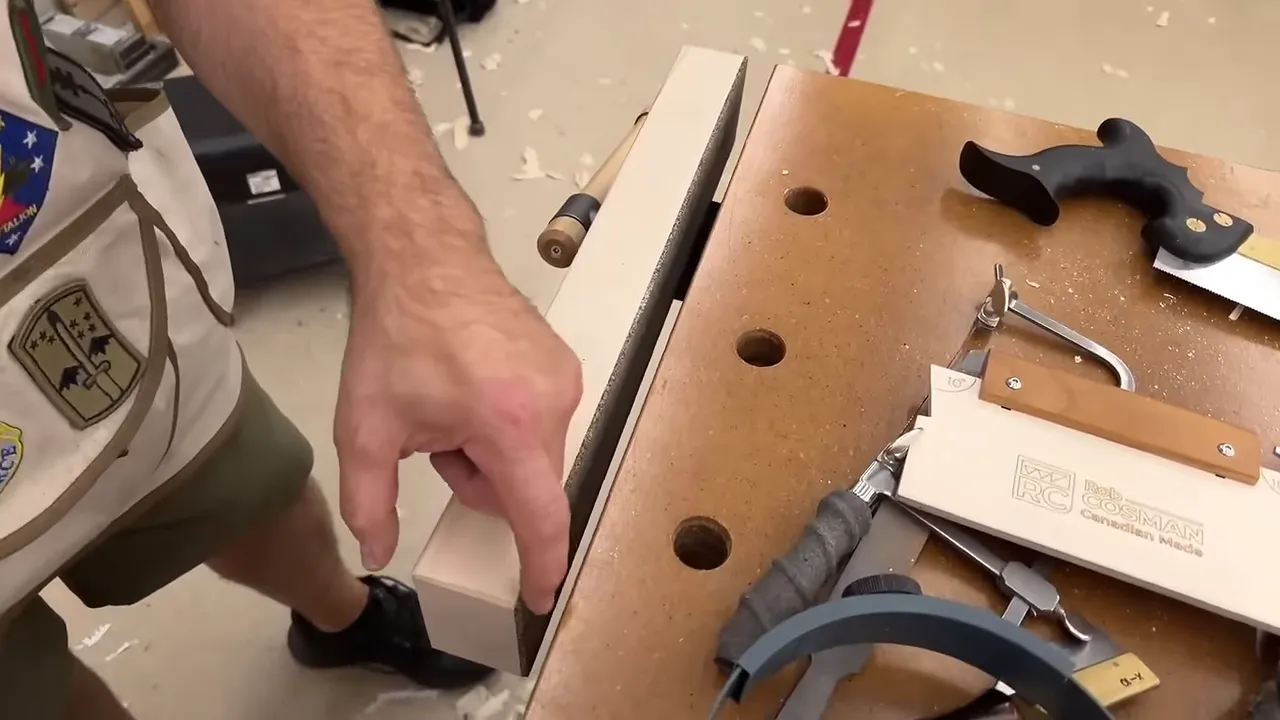
Holding a Wider Board for Sawing
To demonstrate the difference, we found a wider piece of material and clamped it across the jaw. It was an odd-shaped, short piece rather than the long board I would ideally have prepared, but it showed the important point: the work was held solidly across a much wider area.
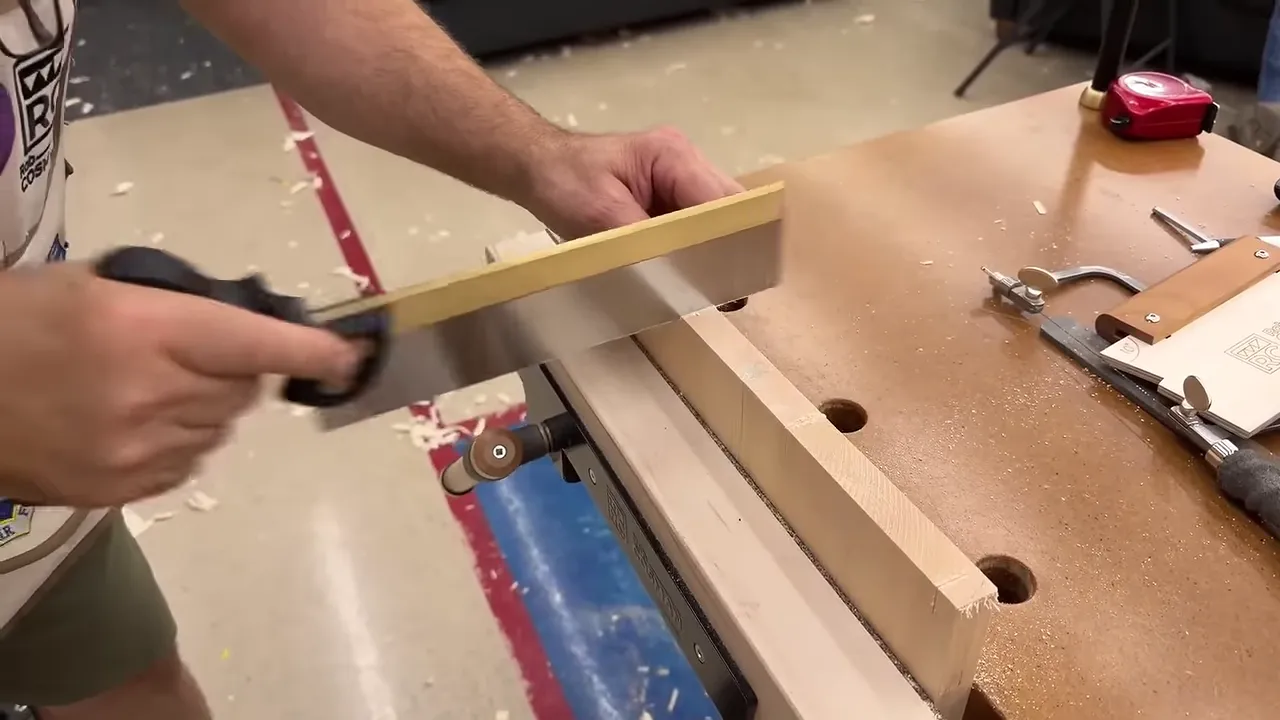
We also demonstrated holding a board for planing. The purpose is practical versatility, not simply a bigger number on a specification sheet.
Ian Kirby, Furniture Design, and Books Worth Studying
Ian Kirby has been one of my mentors since I met him in 1987. Much of what I teach is my own adaptation of the principles he has written about and taught for years.
Beyond his introduction to design for Class 45, we announced plans for him to teach a week-long furniture-design class early in 2027. At 94, he remained remarkably energetic. The admission criteria and other details were still being developed, so this was an early announcement rather than a finalized course listing.
Furniture design is a missing piece for many amateur woodworkers. Learning to saw and plane accurately gives you the ability to make parts. Design helps you decide what those parts ought to become.
We also discussed reprints of two of Ian’s books:
- Down to a Line: Detailed practical knowledge about sawing with hand and power tools.
- Plane Perfect: Instruction covering planing wood by hand and with power tools.
Ian donated 1,500 copies of Down to a Line to be sold with all proceeds going to the Purple Heart Project. At the time, we hoped to have the reprinted books available within about a month.
I also recommended Leading from the Front by Command Sergeant Major Gretchen Evans, who had attended our July class. Meeting the people behind these stories makes their books especially meaningful.
Workshop Dates and Toolmaking News From October 2026
Several additional events were on the calendar when Class 45 met:
- October 29, Orlando Woodcraft: An all-day sharpening and hand-planing workshop for six participants.
- October 30 and 31, Orlando Woodcraft: An in-store woodworking show with demonstrations, questions, tools, and the new vise.
- Early November, Harrogate, England: Demonstrations with Classic Hand Tools at the woodworking show.
- Following Harrogate: Planned all-day seminars with the Southern Fellowship of Woodworkers near Heathrow, covering sharpening, hand planing, through dovetails, and half-lap dovetails.
Those were the arrangements discussed on October 8, 2026, rather than a current availability list. The host retailer, Woodcraft, provides a useful starting point for information about its stores and events.
Before finishing, we also had a look at a batch of special-handled saws being prepared for sale. The selection included pink ivory, Brazilian rosewood, curly maple, English walnut, desert ironwood, bird’s-eye maple, Osage orange, vera wood, black-and-white ebony, kingwood, snakewood, Gaboon ebony, cocobolo, and resin-impregnated bird’s-eye maple.
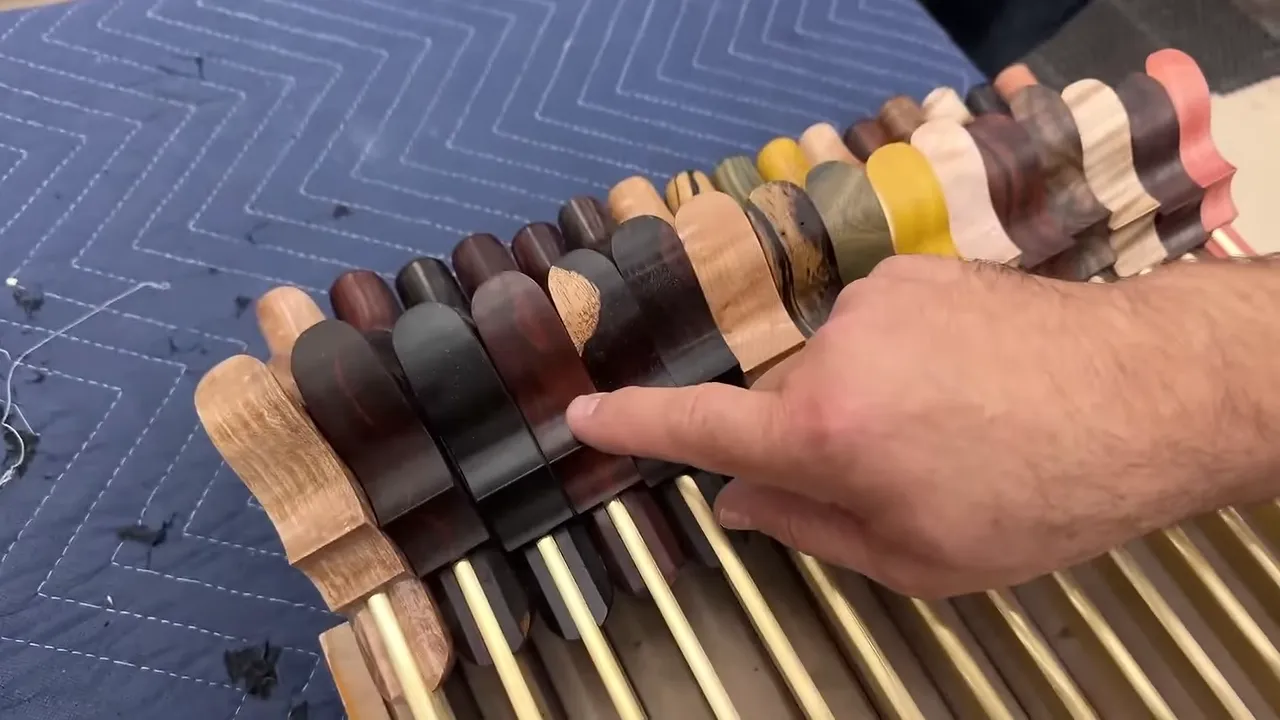
There were some gorgeous pieces in that batch. I was having a little difficulty with the idea of parting with them.
Keeping the Purple Heart Project Going
We had planned to give away a new vise for every $5,000 raised during the fundraiser. The reported amount was roughly $1,400, below that threshold, but we decided to give one away anyway.
Ward Wilson in Arizona was drawn as the winner. He needed to let Gina know whether he wanted a right-hand or left-hand version.
The giveaway was a pleasant finish, but the important result of the evening was hearing what the week meant to the people at the benches. Beginners had made joints they would not have believed possible a few days earlier. Veterans had found concentration and companionship. Civilians had gained a deeper appreciation for people whose experiences were very different from their own.
If you are a combat-wounded veteran interested in the program, or someone who wants to help make these opportunities possible, please get in touch. The donors, families, staff, assistants, and students all have a part in keeping it alive.
The dovetails matter. So does everything that happens while we are learning to cut them.
|